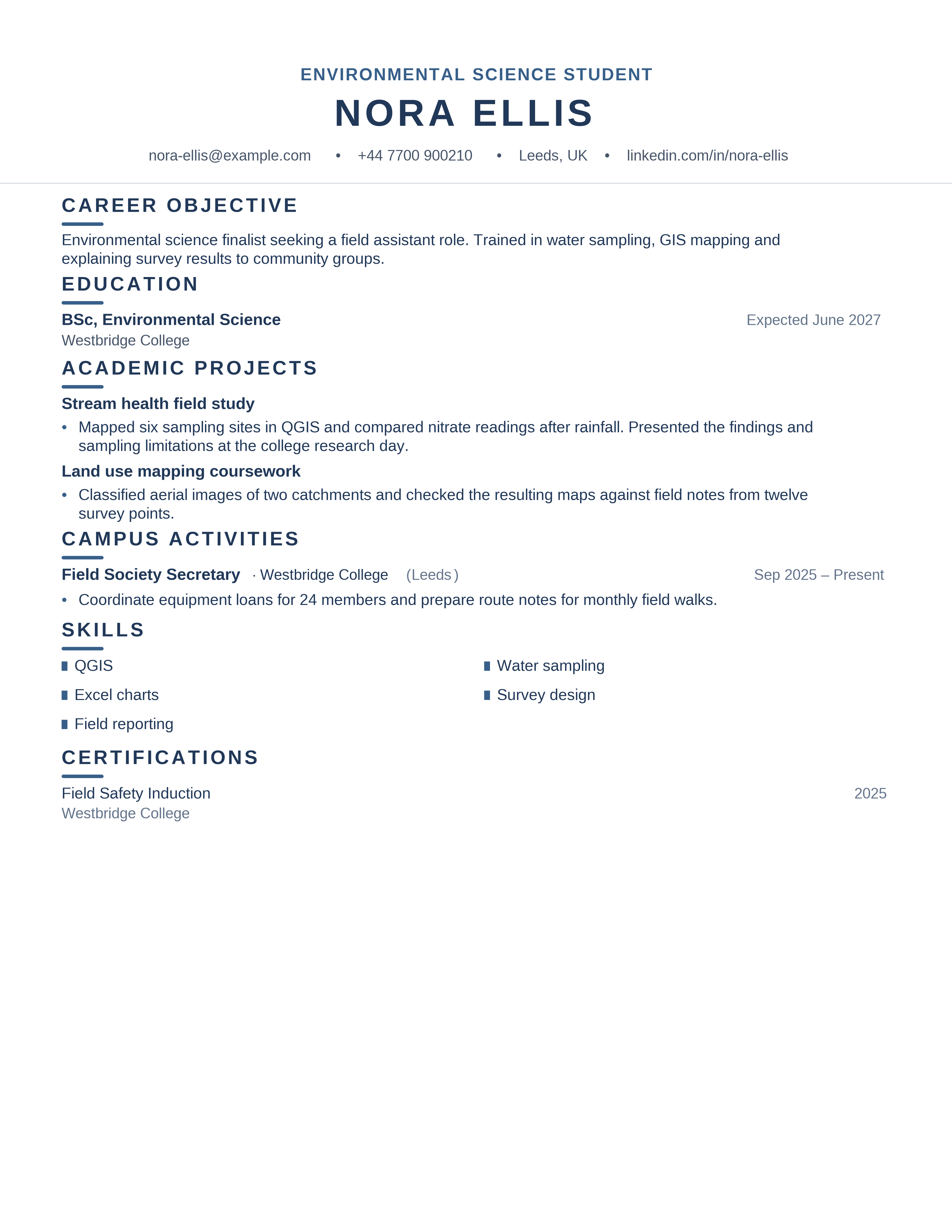
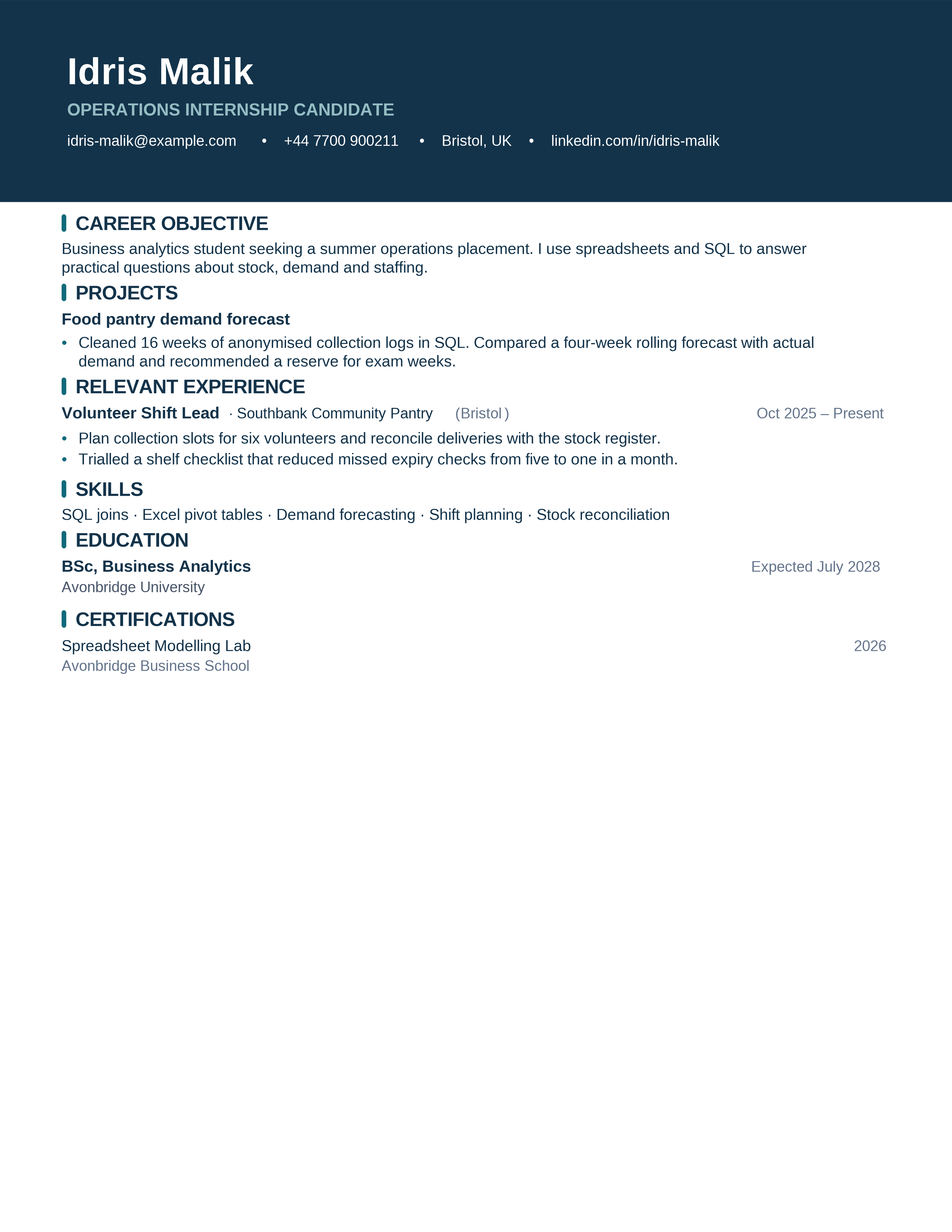
A student resume is a one-page document that applies for a job, internship or placement before the applicant has a career history. It leads with education, coursework and projects, and treats part-time work, societies and volunteering as the experience it is.
It differs from a professional resume in reading order, not in standards. A recruiter still wants dates, evidence and a clean structure; what changes is that a degree, a well-described project and a campus role carry the weight a job history would carry later.
It puts education first while you are studying
Your degree, institution and expected graduation date are the qualification a recruiter is checking, so they belong above a work history that is still short.
It treats projects as evidence
An assignment you can describe — the question, the method, your part and the result — demonstrates how you work. That is what a work history would demonstrate later.
It counts campus and unpaid work honestly
A society role, a volunteer shift or a part-time job goes under experience with real dates and responsibilities, labelled for what it is rather than dressed as an internship.
It stays one page and one column
One reading column, standard headings and a consistent date format. Decoration does not add evidence, and a second page of half-filled sections weakens a first application.
If you have no paid work experience, you are not short of content. You are choosing badly between the content you have: a module with a real assignment, a project you finished, a society you kept running, a shift you turned up to for a year. Describe each one in the same shape an employer recognises: what it was, what you did, what changed.